In commercial and industrial environments, flooring is expected to withstand constant activity. Employees, visitors, carts, equipment, deliveries, and production processes can place significant demands on floors every day. Over time, soil, moisture, debris, and repeated traffic affect both the appearance and condition of these surfaces. For property managers and facility operators throughout Utah, professional floor care is about more than creating a polished appearance. A structured floor maintenance program helps manage daily buildup, maintain safer walking surfaces, preserve flooring materials, and support the professional standards expected in high-traffic facilities.
Commercial flooring experiences conditions that are very different from those found in low-traffic environments. Entryways may collect outdoor dirt and moisture, while hallways, production spaces, loading areas, and common spaces experience continuous movement throughout the day. The resulting wear is rarely distributed evenly. Certain pathways and work zones may deteriorate or become visibly soiled faster than surrounding areas.
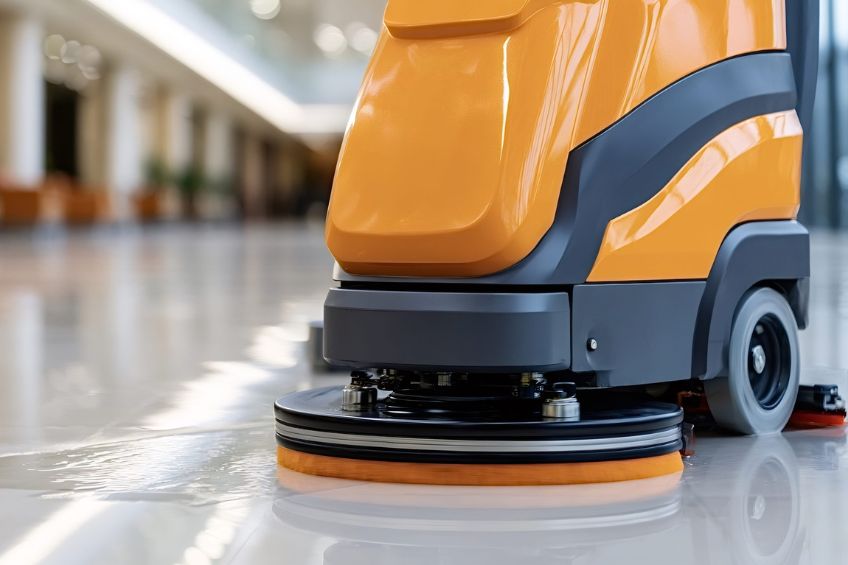
Professional floor care allows facilities to respond to these traffic patterns with cleaning methods appropriate for the surface and level of use. Rather than waiting until floors appear heavily worn or dirty, consistent maintenance helps control buildup and maintain more uniform conditions throughout the property.
Floor maintenance has a direct connection to workplace conditions. Dirt, moisture, spills, and debris can affect walking surfaces, particularly in facilities where employees regularly move between production areas, storage spaces, offices, and exterior entrances.
The Occupational Safety and Health Administration's General Industry standard for walking-working surfaces requires employers to ensure workplaces, passageways, storerooms, service rooms, and walking-working surfaces are kept clean, orderly, and sanitary. OSHA also requires workroom floors to be maintained in a clean and, to the extent feasible, dry condition and walking-working surfaces to be inspected regularly and as necessary and maintained in a safe condition.
For facility managers, these requirements reinforce why floor care should be treated as an ongoing operational responsibility rather than an occasional appearance-focused service.
Commercial facilities can contain multiple flooring materials, each with different maintenance requirements. Hard flooring in corridors may require different cleaning procedures than surfaces in production areas, offices, entrances, or employee spaces. Applying the same approach throughout an entire property may not provide the best results.
Professional floor care considers factors such as flooring material, traffic levels, soil accumulation, and the way each space is used. Regular cleaning also helps prevent abrasive dirt and debris from remaining on surfaces where repeated foot and equipment traffic can contribute to additional wear.
Commercial flooring represents a significant investment, and maintaining it consistently can help preserve its condition and appearance. Allowing soil, stains, and residue to accumulate may eventually require more intensive cleaning and restoration efforts.
A structured maintenance schedule allows facilities to address flooring conditions before deterioration becomes more noticeable. Consistency also makes it easier for property managers to maintain professional standards across high-traffic areas throughout the year.
Managing flooring across a large commercial or industrial property requires more than responding when surfaces look dirty. Working with Complete Facility Management Solutions gives Utah property managers, manufacturing facilities, industrial operations, food processing corporations, and processing plants access to professional janitorial services designed around ongoing facility needs.
By incorporating professional floor care into a broader cleaning strategy, organizations can maintain cleaner walking surfaces, manage high-traffic wear, protect flooring investments, and create facilities that reflect consistent standards from the ground up.