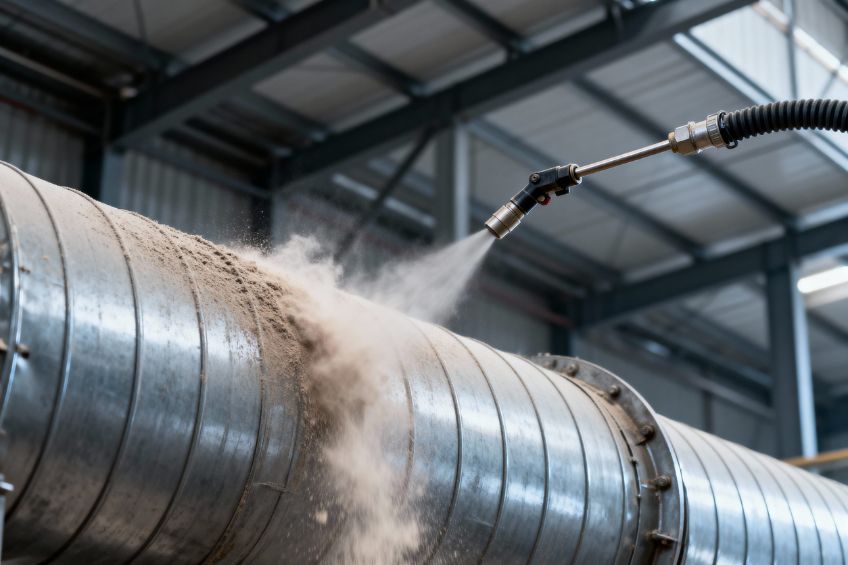
In industrial and manufacturing environments, attention often stays focused at ground level where production happens. However, some of the most significant safety and operational risks accumulate overhead. Structural beams, ductwork, piping, cable trays, and lighting systems collect dust and debris over time. Because these areas are not part of daily cleaning routines, buildup can continue unnoticed until it affects safety, air quality, or regulatory compliance. For facilities across Utah, overhead cleaning plays a measurable role in maintaining safer and more reliable operations.
Industrial facilities that handle paper, packaging materials, wood products, or food ingredients are especially vulnerable to dust accumulation. The Occupational Safety and Health Administration has long identified combustible dust as a hazard in manufacturing environments. When fine particles accumulate on elevated surfaces, they can become fuel sources if disturbed and exposed to an ignition source. Even small accumulations in rafters or on overhead equipment can contribute to fire events if not addressed. Routine overhead cleaning reduces this risk by removing buildup before it reaches hazardous levels.
Dust and debris do not remain stationary. Air circulation systems can redistribute particles throughout the facility, affecting indoor air quality and equipment performance. When overhead areas remain uncleaned, accumulated dust can enter ventilation systems, settle on machinery, and interfere with sensors, motors, and moving components. Over time, this buildup contributes to airflow restrictions, increased strain on equipment, and inconsistent system operation. Proactive overhead cleaning helps maintain cleaner airflow, reduce mechanical stress, and support reliable performance across industrial environments.
Food processing and manufacturing facilities must also account for contamination control throughout the entire environment, not just at floor level. Elevated surfaces collect dust and particles over time, and gravity eventually brings that material back down into active production areas. When overhead structures, piping, and fixtures are not included in cleaning schedules, accumulated debris can reenter workflows and affect surrounding equipment or materials. Incorporating overhead cleaning into routine maintenance helps facilities maintain cleaner production zones and reduce the likelihood of issues that could complicate internal reviews or third party inspections.
A professional overhead cleaning program often targets areas such as:
By systematically removing buildup from these surfaces, facilities reduce the potential for safety incidents and mechanical interference.
Overhead cleaning should not be treated as an occasional project. Instead, it functions best as part of a structured maintenance strategy. Facilities that schedule regular evaluations of elevated surfaces maintain better visibility into potential risks and reduce long term accumulation. Partnering with Complete Facility Management Solutions allows Utah facilities to incorporate professional overhead cleaning into broader routine maintenance and repair programs. Their teams understand industrial environments and implement cleaning methods designed to protect operations while addressing elevated risk areas.
In complex industrial facilities, what cannot be seen can still affect safety, compliance, and productivity. Overhead cleaning ensures that hidden spaces do not become hidden hazards.