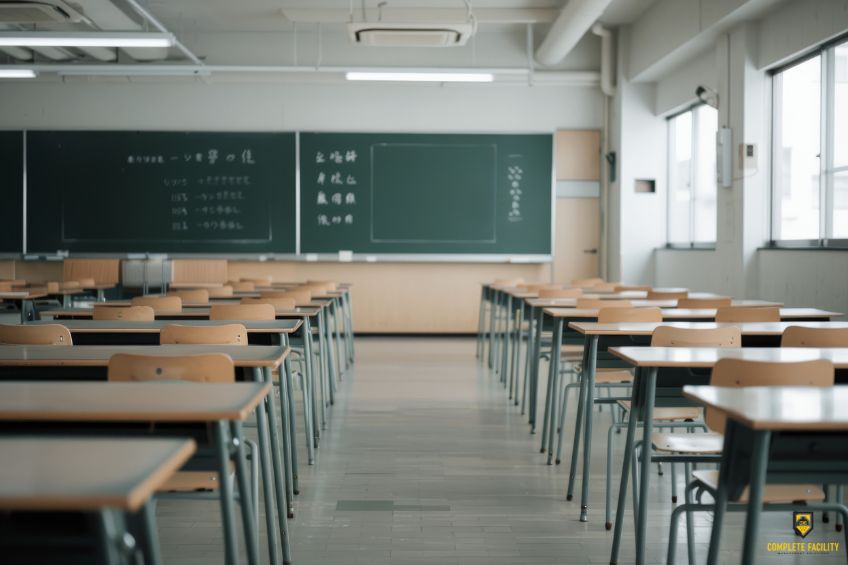
School Districts are under pressure to do more with less, balancing budgets while creating spaces that support learning. Energy efficiency often gets treated as a budget line item, but its impact goes far beyond cost savings. The performance of heating, cooling, lighting, and ventilation systems directly influences the quality of the learning environment. Stable indoor temperatures, good air quality, and effective lighting all shape how well students and teachers can focus, engage, and succeed.
The connection between building performance and learning outcomes is well-documented. A study published in the journal Building and Environment (via ScienceDirect) showed that optimizing mechanical system schedules in educational spaces reduced energy use while maintaining indoor air quality and thermal comfort. This demonstrates that efficiency upgrades do more than trim utility costs—they actively support health and concentration in the classroom. For schools, every dollar invested in building systems doubles as an investment in student performance, attendance, and well-being.
In most school districts, energy is the second largest expense after personnel. Lowering utility bills creates opportunities to reinvest in staff, technology, and facility improvements. Programs like the Department of Energy’s Renew America’s Schools initiative highlight how efficiency upgrades can deliver both financial and health benefits. Locally, the Davis School District was recognized as a 2024 Utah AEE Energy Champion after implementing weatherization projects, HVAC upgrades, and zero-energy design. These efforts cut operating costs while creating consistent indoor environments that directly supported learning outcomes.
Translating efficiency goals into better learning conditions depends on deliberate strategies. Facility managers can prioritize:
These strategies extend equipment lifespan, lower costs, and foster environments where students and teachers can perform at their best. They also provide a model for other commercial and industrial properties, where occupant productivity depends on stable, efficient facilities.
Managing these upgrades requires coordination across multiple systems—something that often overwhelms in-house teams. That’s where Complete Facility Management Solutions provides value. With expertise in maintenance, safety, and system optimization, CFMS helps schools and facility managers align efficiency measures with operational needs. Their integrated approach ensures projects are not just implemented but sustained, delivering measurable returns in both dollars saved and improved occupant experiences.
Energy efficiency in Utah’s schools is not just about lowering energy bills. It is about supporting concentration, health, and long-term educational success. With the right strategies—and the right partner—the hidden link between efficiency and learning becomes a visible advantage for every student and teacher.